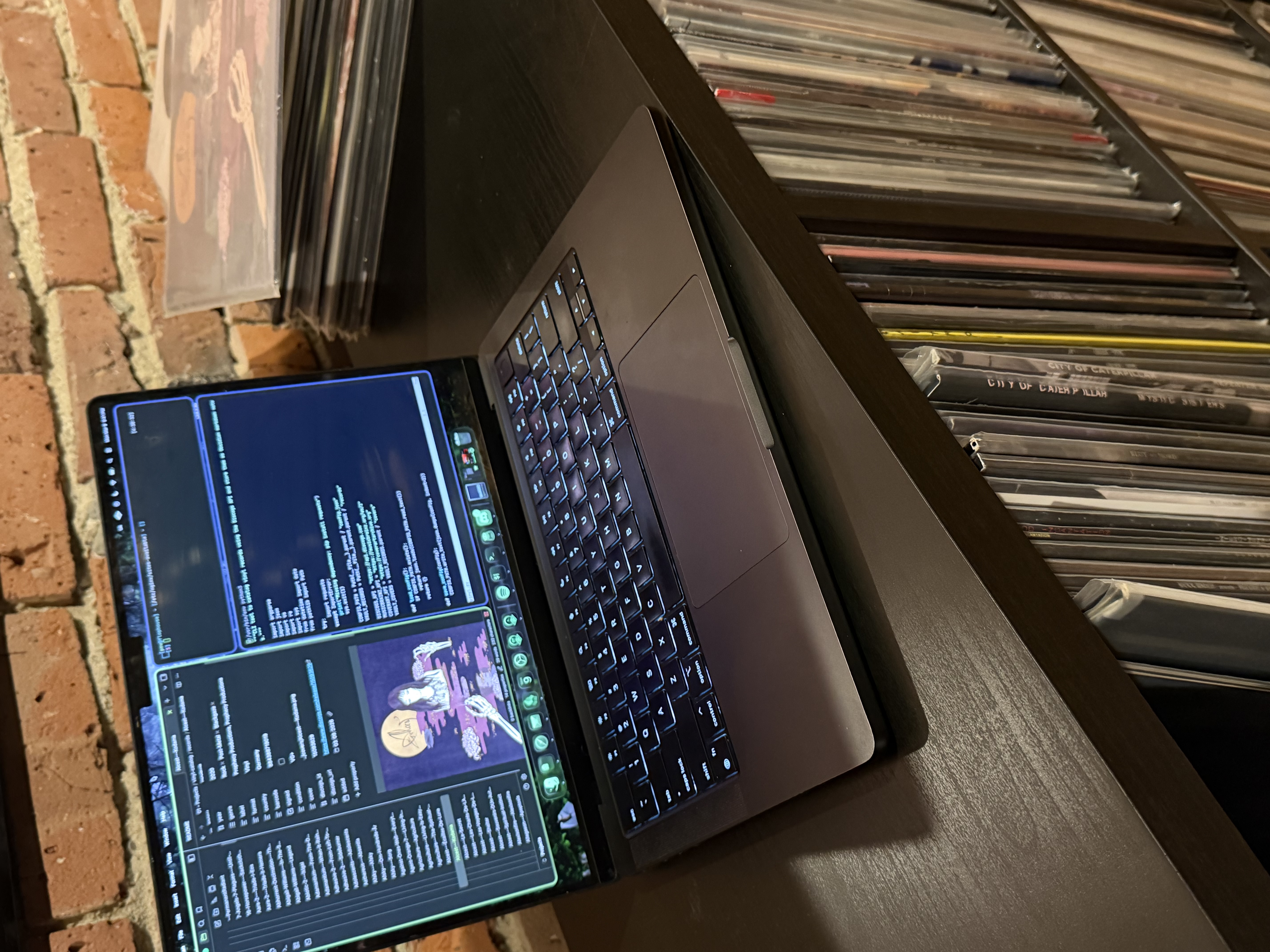
I think I have around 1,000 records. I don’t even know for sure, because instead of counting them, I ditched Discogs and started building my own tracking platform. Except I didn’t build the platform either. I built this blog first. One of those “one thing led to another” kind of days.
The starting point
I knew at least some of my collection was already on Discogs. I had no idea how much, or how badly out of date it was, because I couldn’t remember the last time I had updated any of it. Ask me what the last record I bought was, though. That I know for sure.
Anyway. Instead of checking first (like a sane person), I grabbed a stack of records, opened Obsidian, and started typing them out by hand:
- Alcest - Écailles de Lune
- Alcest - Kodama
- Alcest - Le Secret
- Alcest - Shelter …
A few entries in, it hit me that I might have picked the dumbest possible way to do this.
So I checked Discogs.
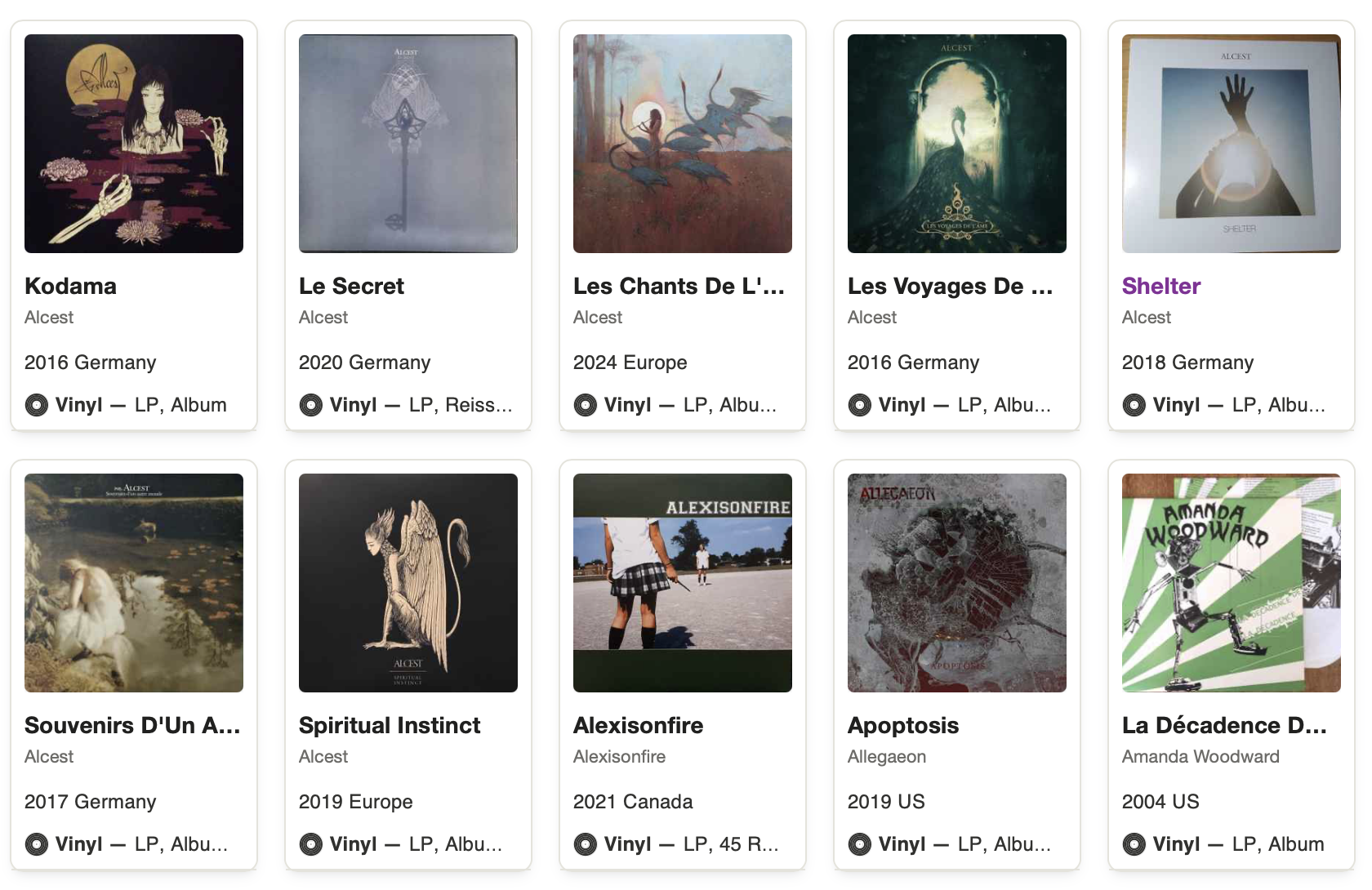
The records in that stack were already there.
Which didn’t help as much as I wanted it to. I still had hundreds of records left, no idea when those entries had been added, no idea what was missing, and no real trust in the catalog as a whole. It was enough data to make starting over feel silly, and not enough to make continuing feel clean.
I was going to have to go through everything anyway.
Pivot
What I had, basically, was the worst of both worlds.
Discogs had the data. Tons of it. Pressings, tracklists, credits, catalog numbers, barcodes, all the little details I’d want if I were trying to catalog the collection properly. But actually moving through that information, cross-referencing it, connecting it to notes, or seeing it the way I wanted to see it? Miserable.
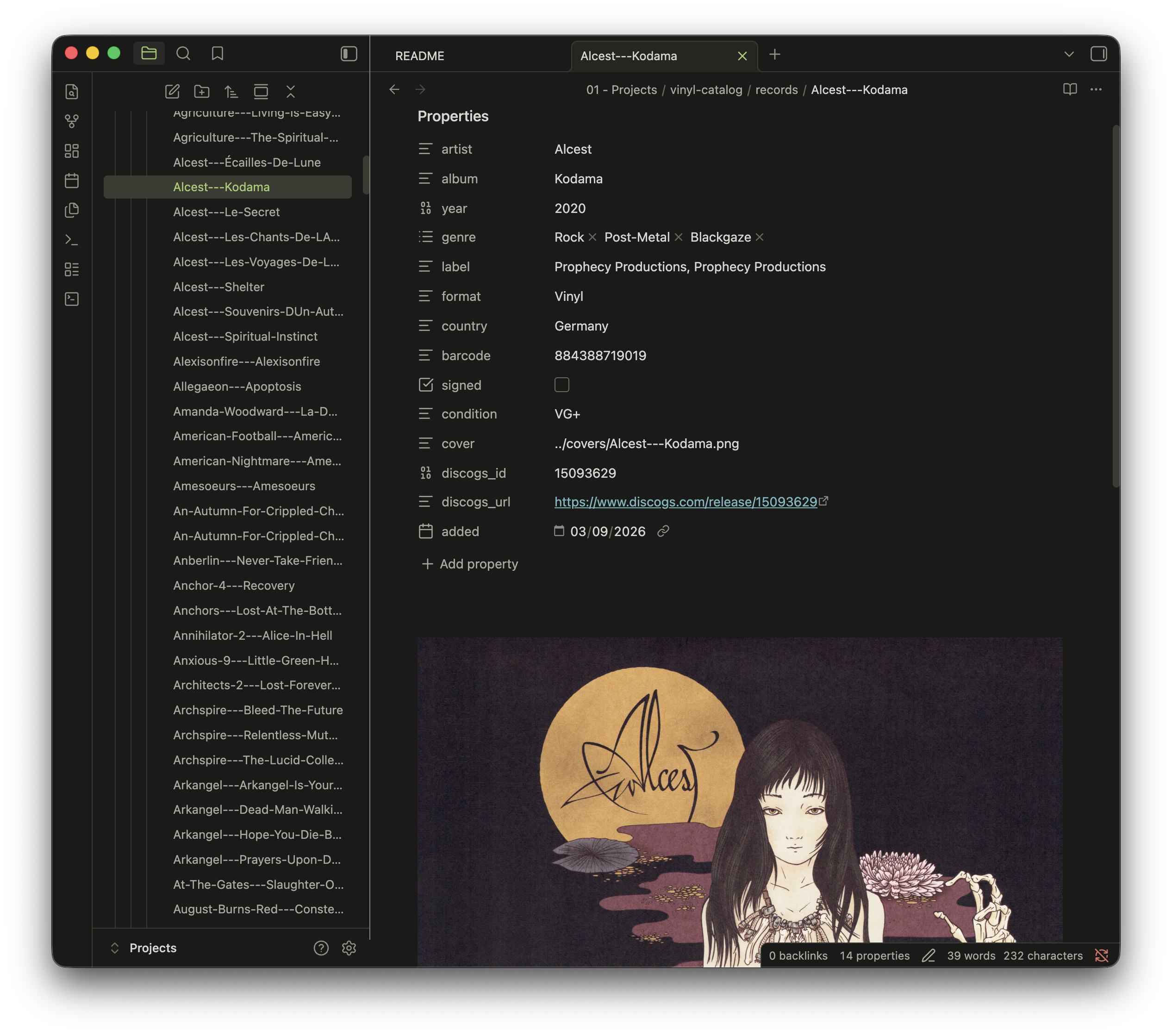
Obsidian was the opposite. No built-in metadata, obviously, but much better for navigation. Better for links, notes, context, side-by-side thinking. Better for the part my brain actually cares about once the data exists.
So the obvious solution, apparently, was not to pick one. It was to drag the Discogs collection into Obsidian and make the two systems cooperate.
Why?
Good question.
Simon Sinek would probably not be thrilled that I skipped the why and went straight to writing a CLI that could pull my collection, fetch metadata, grab artwork, and spit the whole thing out into markdown. No roadmap. No grand vision. Just a growing sense that the friction was annoying enough that I’d rather build around it than tolerate it.
About 600 lines of code later, ‘vinyl.py’ can add individual records or sync an entire Discogs collection into Obsidian.
It’s terrible.
Now I have two outdated lists instead of one.
So, what now?
One thing I learned from all of this is that Discogs has a lot of metadata, but not many useful ways to actually do anything with it. I want to be able to ask simple questions about my collection: Which records are blackgaze? What were the last albums I bought? Which ones are signed? Which one should I play tonight?
And of course, now that I’ve started, I’m already thinking about everything else. A random record button. Personal notes. Ratings. Maybe a way to track where I bought something, or how much I paid for it. The usual “this could be a product” spiral.
Anyway. I have a domain, set up a website, and somehow ended up making a blog first.
Hi. Welcome to the show.